
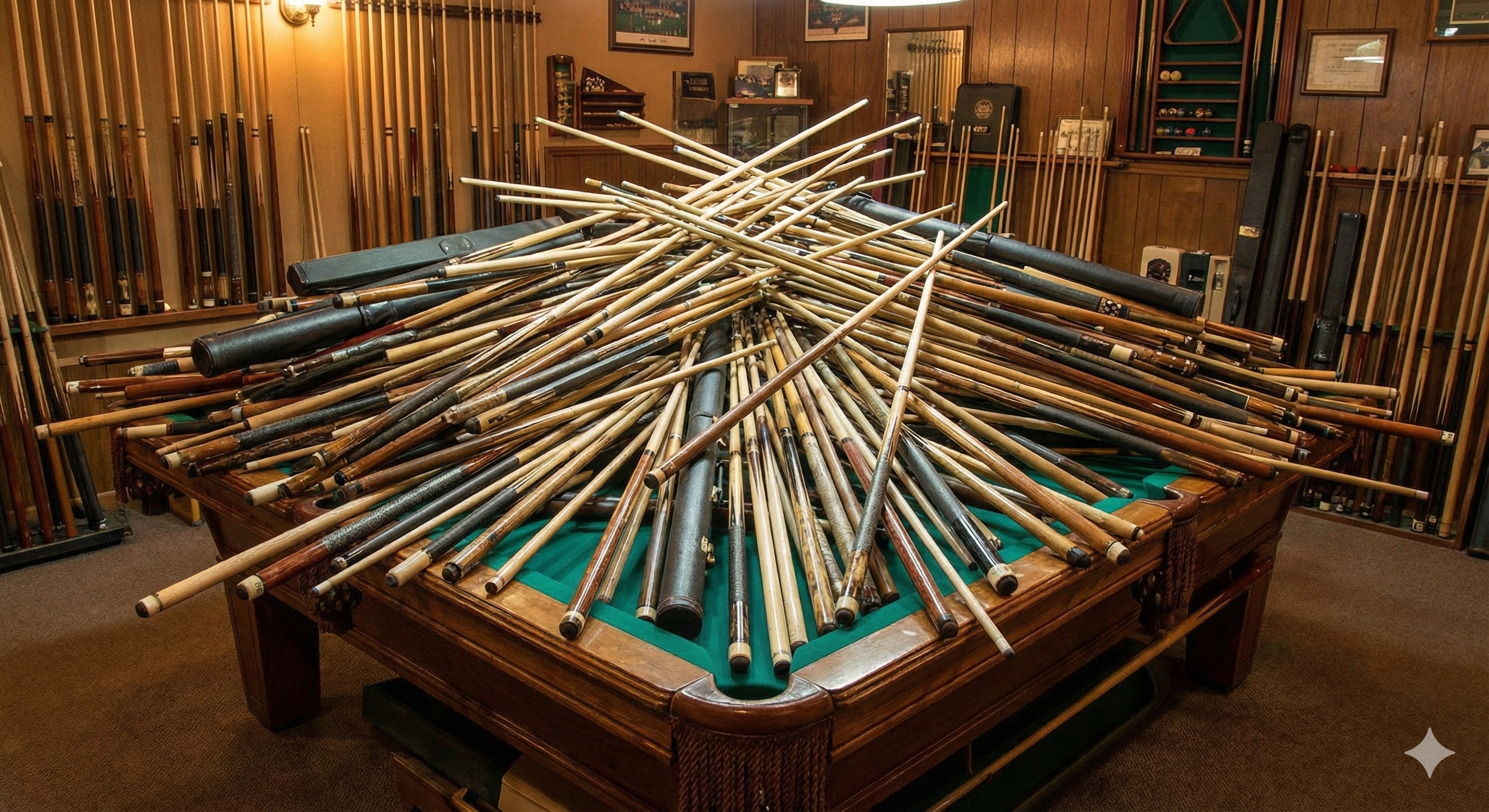
Introduction
Choosing a pool cue is one of the most personal decisions a player can make. While many beginners assume any cue will do, experienced players know that the right cue can dramatically affect consistency, feel, and confidence at the table. At Spot On Billiards, we help players of all levels find equipment that actually complements how they play.
This guide breaks down what really matters when selecting a cue so you can make an informed decision instead of guessing.

Cue Weight and Balance
Cue weight typically ranges from 18 to 21 ounces. Lighter cues allow for faster strokes and finesse while heavier cues can help stabilize power shots. Balance is just as important as weight. A forward-balanced cue may feel more powerful, while a rear-balanced cue often feels quicker and more controlled.
Players who rely on smooth, controlled strokes usually benefit from balanced or slightly rear-weighted cues. Power players often prefer a bit more forward weight.

Shaft Diameter and Feel
Shaft diameter directly affects accuracy and feedback. Thinner shafts offer greater precision and are favored by advanced players who apply spin and control. Thicker shafts provide more forgiveness and stability, making them ideal for beginners and casual players.
Low deflection shafts are designed to reduce cue ball deflection on off-center hits. These are popular among competitive players because they allow for more predictable results.
Tip Hardness and Contact
The tip is where everything happens. Soft tips grip the cue ball more and generate spin but require more maintenance. Medium tips balance control and durability. Hard tips deliver crisp contact and consistency but offer less spin.
There is no universal best choice. The right tip depends on how aggressively you play and how much feedback you prefer.
Materials and Construction
Maple remains the most common shaft material, but carbon fiber shafts have grown in popularity for their consistency and durability. Butt construction can vary widely, from simple maple designs to intricate inlays that add both style and weight distribution.
Performance should always come before appearance, but a cue you love looking at often becomes a cue you play better with.
Final Thoughts
The best cue is not the most expensive one. It is the cue that feels natural in your hands and supports your playing style. If you are unsure, visiting a professional shop and testing different options can save you years of frustration.
At Spot On Billiards, we help players match equipment to skill level, goals, and personal preference so every shot feels intentional.
Share:
Carbon vs. Wood Pool Cues: Which One Should You Choose?
The Importance of Proper Cue Maintenance and Care